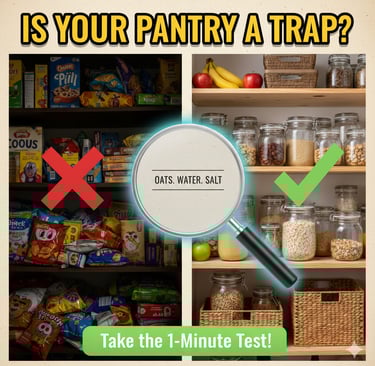
Is Your Pantry 'Nourish Naturally' Approved? Take the 1-Minute Test!
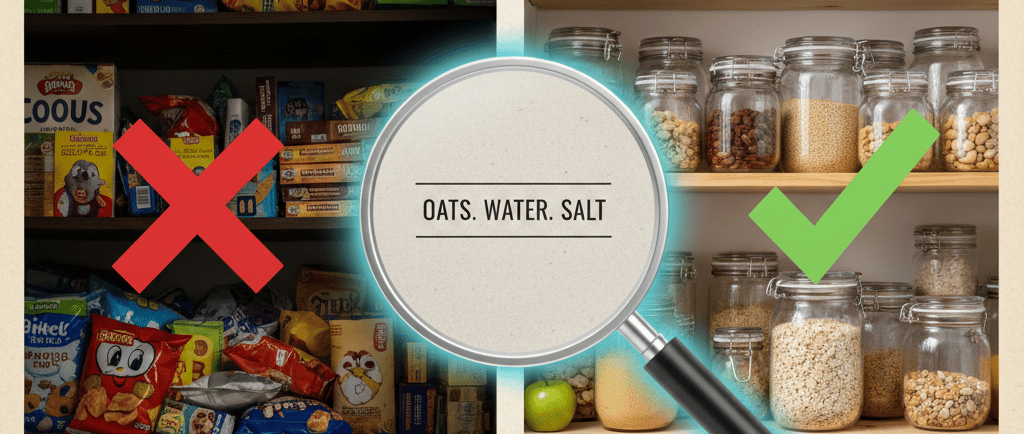
Does your pantry contain pure nourishment, or is it a warehouse for "subtle traps"? Most people believe they are buying healthy staples, only to find their shelves are lined with ultra-processed foods engineered in laboratories to maximize shelf life and trigger cravings.
12/26/20254 min read
The Wake-Up Call: A Personal Story
It was a typical Saturday morning when I decided to embark on my weekly grocery shopping, eager to restock my pantry with what I believed were healthy, nourishing staples. As I maneuvered through the aisles, the colorful packaging and enticing imagery caught my eye. One product, in particular, stood out to me: a cereal box adorned with a picturesque farm scene and labeled ‘all-natural.’ I felt a sense of satisfaction at the thought of selecting a wholesome option for breakfast.
Upon reaching home, however, I took a moment to scrutinize the ingredients list on the back of the box. To my astonishment, that seemingly innocent cereal was loaded with additives, refined sugars, and preservatives—elements far from the nourishing experience I had envisioned. The charming farm image had masked the reality of its questionable composition. This enlightening moment served as a wake-up call and highlighted the essential need for vigilance in our grocery selections.
The experience left me questioning how often we fall prey to clever marketing tactics that allure us into believing we are making healthy choices. The common label 'natural' can often mislead shoppers, causing them to overlook unhealthy components. It is crucial to recognize that not everything marketed as advantageous for our health aligns with our nutritional goals.
This incident compelled me to adopt a more mindful approach in my kitchen and pantry organization. Rather than simply relying on attractive packaging or buzzwords, I began to prioritize understanding the ingredients and the overall nutritional value of each product. The eye-opening realization that our food choices significantly impact our health catalyzed my journey toward a truly 'Nourish Naturally' approved pantry.
The Revelation: What Did I Find?
In my recent exploration of pantry staples, I embarked on a journey to decode the ingredients present in commonly used food items. This ocular investigation was primarily aimed at identifying potential culprits in our diets that undermine the principles of wholesome eating. The process unveiled a somewhat unsettling reality—several products contained ingredients that are often overlooked, yet detrimental to our health. Notably, high fructose corn syrup, BHT, and Red 40 emerged as key offenders.
High fructose corn syrup, a widely utilized sweetener, is frequently found in processed foods and beverages. Although many consumers may presume that any form of sugar is unadvisable, the ramifications of high fructose corn syrup extend far beyond that. Its excessive consumption is linked to numerous health issues, including obesity and metabolic syndrome. The ease with which it escapes our scrutiny lies in its marketing; many products bear labels that emphasize natural sweetness, thereby obscuring the actual ingredients.
Next, BHT (butylated hydroxytoluene) surfaced as a synthetic antioxidant and preservative commonly added to extend shelf life. While often taken for granted, its long-term effects are still a subject of ongoing research and debate. The reality is that its inclusion in our food supply may not mirror the spirit of nourishing natural foods.
Lastly, the dye Red 40 stands out as a vivid example of artificial coloring. This component, seen in candies, beverages, and snacks, is often simply accepted due to its widespread prevalence. However, findings suggest that consumption of artificial coloring could lead to hyperactivity in children and other health concerns that deserve deeper scrutiny.
These revelations underscore a significant issue: complacency in trusting food labels. Consumer vigilance is essential, as not every product that appears healthy or appealing upholds the promise of nutrition. It is crucial for individuals to critically assess the contents of their pantry, ensuring that their choices align with genuinely nourishing principles.
Understanding the Risks: Why These Ingredients Matter
In today’s health-conscious society, the ingredients in our food are of paramount importance. Certain additives, particularly high fructose corn syrup, BHT (Butylated HydroxyToluene), and Red 40, may have significant negative implications for our health. Understanding why these ingredients are potentially harmful can empower consumers to make more informed food choices.
High fructose corn syrup (HFCS), a common sweetener in many processed foods, has been linked to various health issues. Research suggests that excessive consumption of HFCS may contribute to obesity, insulin resistance, and metabolic syndrome. This is partly due to the body’s difficulty in metabolizing fructose, which can lead to energy crashes and mood swings, leaving individuals feeling tired and irritable.
Another ingredient of concern is BHT, a synthetic antioxidant used to preserve fats and oils in processed foods. While it helps extend shelf life, studies have shown that BHT may disrupt endocrine functions and could potentially be carcinogenic. Long-term consumption of products containing BHT can also lead to increased oxidative stress in the body, which is linked to chronic health conditions.
Lastly, Red 40, a synthetic dye found in numerous snacks and drinks, has been associated with hyperactivity and allergic reactions, particularly in children. Although the FDA considers it safe in limited quantities, many health experts argue that its widespread use can exacerbate behavioral issues and contribute to long-term attention deficits.
Health risks linked to these ingredients underscore the importance of being vigilant about food labels. By understanding how high fructose corn syrup, BHT, and Red 40 can impact well-being, consumers can make choices that support their long-term health and vitality.
Empower Yourself: The Tool You Need
In today’s world, making informed decisions about food has become increasingly important. To aid individuals in this endeavor, we introduce a free tool designed specifically to decode food labels, empowering users with the knowledge necessary to make healthier choices. This innovative tool is accessible to everyone, requiring no prior expertise in nutrition or food science, making it an invaluable resource for all, regardless of background.
The function of this tool is straightforward yet highly effective. Users can simply input or scan food product labels, and the tool analyzes the contents, highlighting harmful ingredients that you may want to avoid. By utilizing this tool, individuals can easily navigate the complexity of food labels, identifying common allergens, artificial additives, or preservatives that may have adverse effects on health. This demystification of food labels does not just streamline the shopping experience; it empowers users to take control of their dietary choices.
For those looking to improve their pantry snacks and meal options, this tool to enhance food literacy is a game changer. It encourages mindful eating by providing insights into what goes into your body, allowing for a more conscious selection of pantry staples. Best of all, this resource is designed for speed; you can assess your food choices in just a minute, making it easy to integrate into your shopping routine.
In light of the increasing awareness around nutrition, we strongly encourage you to take advantage of this tool immediately. Empower yourself to decode food labels and make choices that align with your health goals. Don’t wait—ignite a positive change in your pantry today!